


In this article:

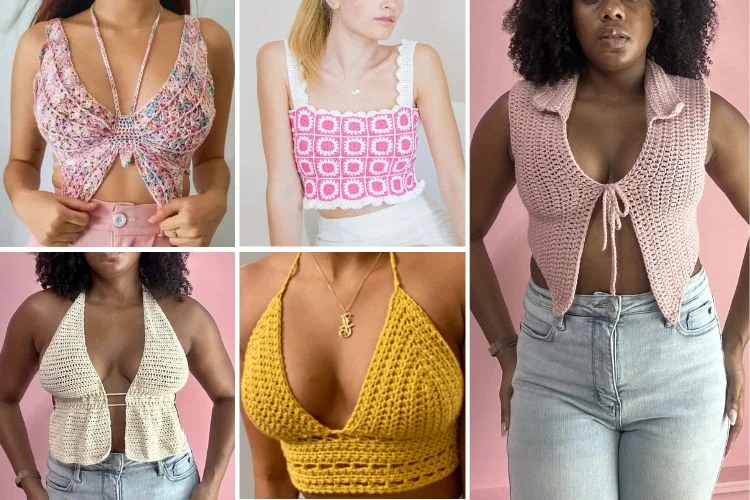
If you consider making your own handmade wardrobe, crochet tops are a fantastic place to start. However, choosing the right pattern, tools, and materials might be challenging, especially if you are a beginner. Use our guide as a blueprint for your next project hunt and have fun!
Choosing a Pattern
The first step on the journey to a handmade closet is finding the right pattern. Consider your style and needs while researching crochet top patterns on our website. Think about what you like to wear and what would go nicely with the clothes you already have.
Less experienced crocheters should consider simple designs with a small amount of details. Choose easy tube tops, granny square top patterns, or crochet tops made with basic stitches only. Written patterns with additional instructions, such as step-by-step photos or video tutorials, will be the perfect choice for first-time crocheters.
Taking Measurements
Making garments always requires taking measurements first, whether you’re sewing, crocheting, or knitting. This step will help you choose the right size of the top before you start, buy enough yarn, and plan for adjustments.
First, prepare a measuring tape, a piece of paper, and a pen. Measure yourself in your underwear, and for the best results, ask for help. This will ensure that your body is in its natural, relaxed position. To learn how to measure yourself properly, use visuals and charts.
The most important measurements you should take are:
- bust circumference (the widest part of your chest)
- waist circumference (the smallest part of your torso)
- back width (measured between the shoulders)
- top length (measured vertically from the bottom of the neck)
Learn how to properly measure yourself using this guide:
Choosing the right size
Once you measure your body, compare it with the dimensions of various sizes given in the pattern. They usually range from XS (extra small) to XL (extra large). However, more and more designers include extra sizes, such as XXS and XXL. Oversized top patterns often come with a smaller size range (S-L) or even in-between sizes (S/M, M/L). Every designer should provide exact measurements for each size in the pattern notes.
You may encounter these terms:
- Positive ease – the garment is designed to be wider than your body, creating a loose fit. For example, if the garment has 20 cm (8 in) of positive ease, it means that it has 20 cm (8 in) more in circumference than your body. If your bust circumference is 90 cm (35 in), the garment will have a circumference of 110 cm (43 in) in the bust area.
- Negative ease – the garment is designed to be narrower than your body, creating a snug fit. For example, if the garment has 10 cm (4 in) of negative ease, it means that it has 10 cm (4 in) less in circumference than your body. If your bust circumference is 90 cm (35 in), the garment will have a circumference of 80 cm (31 in) in the bust area.
Choose the right size for you and follow the yarn estimate to buy the right amount of materials. If you are in between sizes, usually the best option would be to go up, unless you want a snug fit.
Getting the Gauge Right
No crochet project can be done without these two components: yarn and a hook. While choosing the right type of yarn and hook may seem complicated, especially if you are a beginner, it doesn’t have to be a challenge. c
First of all, almost all crochet patterns recommend specific yarns and hook sizes to achieve the right gauge – it ensures the garment will fit within the size range. Designers usually measure it within a square 4×4-inch space and count the stitches and rows inside. If your gauge is off, meaning you have a different number of rows and stitches than the author, your final piece will be either too big or too small. Adjusting the size of your crochet hook or changing the yarn weight should solve most gauge problems.
When in doubt, always go for the recommended hook size and yarn weight.
Choosing the Right Type of Yarn
The type of yarn you choose for your summer top is crucial. The right yarn combines the right feel, drape, and qualities. All of these affect the final look and comfort level of your piece.
The Best Yarns for Crochet Tops
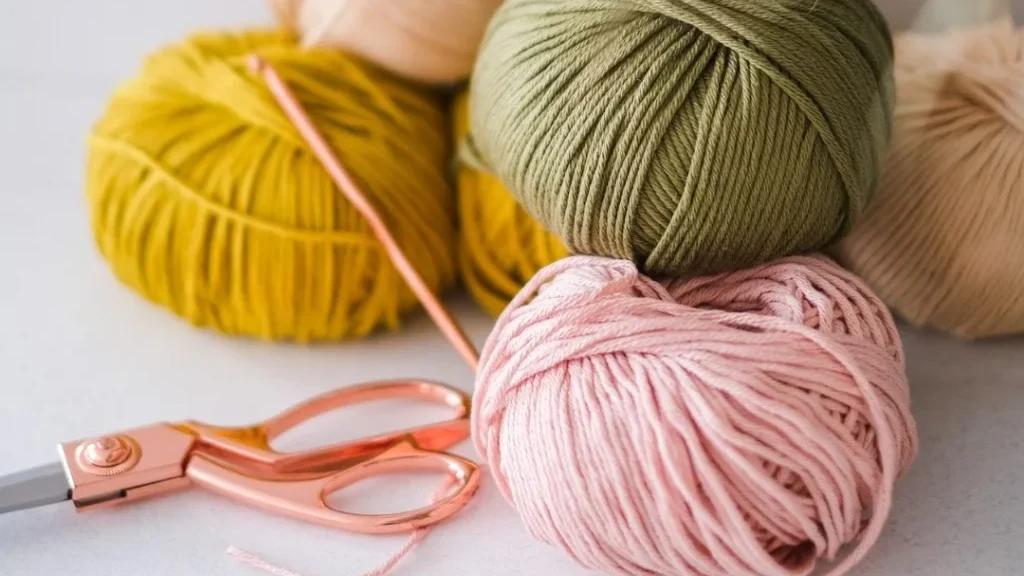
Summer crochet tops are usually made with natural fibers, such as cotton, linen, silk, or bamboo. These fibers are breathable, absorb water easily, and therefore are perfect for hot days. Lightweight yarns give crochet tops a nice drape, while heavier ones add style, creating visible texture.
Can I use wool for a crochet top? The answer is yes! Soft and delicate wool yarns, such as merino, will be perfect for summer knits and crochetwear. It’s bouncy, hygroscopic, and naturally antibacterial. The smooth finish looks luxurious and makes the garment delicate for the skin. Additionally, if you don’t mind the feel of mohair on bare skin, you can use it to make lacy or mesh garments. They will be super lightweight and breezy.
Avoid These Yarns
When making summer projects, avoid synthetic yarns, such as acrylic, and heavy wool. Their qualities are better suited for colder months, and they may not be pleasant against your skin.
Additionally, consider the yarn care instructions. Cotton yarns are the most popular choice because you can wash them more often without damaging the fibers. Luxurious merino wool, however, has to be hand-washed, which may be tedious.
Crochet Top Construction
Every crochet top type has a slightly different construction and silhouette.
The most popular top constructions include:
- One-piece – this top has no seams; it is worked in one continuous pattern.
- Top-down – we start by shaping the top part of the garment, and gradually go down, instead of the other way around.
- Seamed – first, we crochet individual flat pieces, which are then seamed to create a three-dimensional garment.
- Raglan – a type of sleeve that creates an integral shoulder piece of the garment. The increases are placed on a diagonal line between the neck and the armpit.
- Made with squares – this type of top is made entirely with individual square pieces joined together.
We can also divide crochet tops based on the skill level required to complete them. Explore various free crochet top patterns in our database and use helpful filters to find exactly what you want.
Crochet top types for beginners
- A Tube Top is a simple, rectangular piece of fabric wrapped around the torso. This type of top doesn’t have sleeves, straps, ties, or clasps, and is usually cropped. Thanks to the stretchy crochet fabric, it adapts to the body shape.
- Oversized Top has a roomy fit that looks great on different body types. Minor mistakes or differences in tension become invisible when the silhouette has a lot of positive ease.
- Halter Tops often use basic crochet techniques and little shaping. The tie around the back of the neck is an easy way to adjust it to the body.
- Crop Top patterns have various shapes and shoulder styles, but what makes them unique is their short length, usually ending at the ribcage.
Top types for intermediate crocheters
- Crochet Bralette is an easy-to-make type of summer garment that uses very little yarn. However, it requires more fitting than beginner-friendly designs. Crochet bralette has to create enough support and coverage for your type and size of bust.
- Boho Tops are usually quite simple in shape but feature more details, such as unusual stitch combinations, lace, fringe, or beads.
- Granny Square Top doesn’t require shaping and consists exclusively (or almost exclusively) of granny squares. However, it often features color changes, decorative joining, or textural effects.
Crochet top types for advanced crocheters
- Fitted Tops with many increases and decreases are similar to made-to-measure tailored pieces. Getting the exact fit for your silhouette is a challenge, but it’s definitely worth it.
- Fitted tops with set-in sleeves are for crocheters with a great understanding of garment construction and body shapes. Creating a nice fit around the shoulders and back requires many hidden details and advanced techniques.
- Detailed lacy tops are a fantastic choice for those who like unique pieces, but they can be very time-consuming. Intricate lace patterns are hard or impossible to memorize, and they mix various crochet techniques.
As you can see, there’s a crochet top for everyone. Assess your skill level and decide: are you up for a challenge, or do you need a simple project to chill out with?
Exclusive Crochet Top Patterns
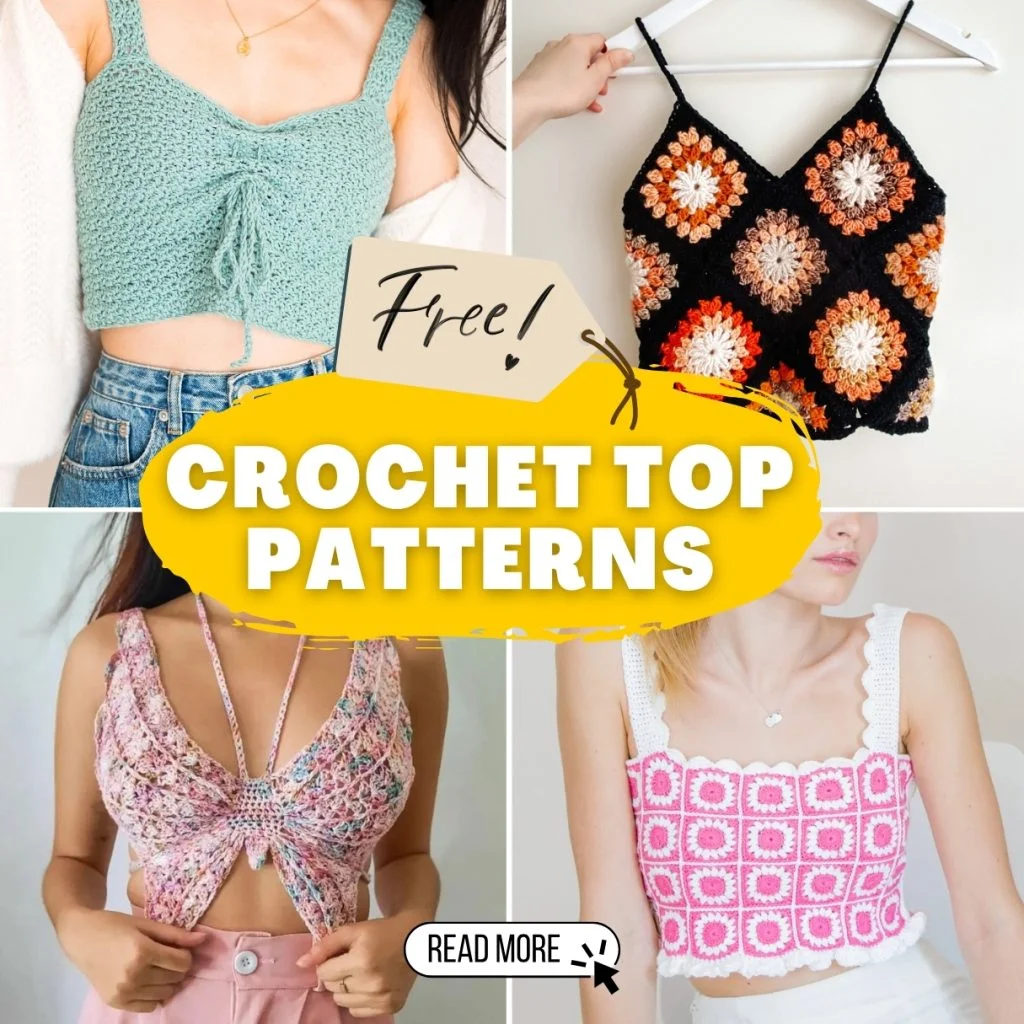
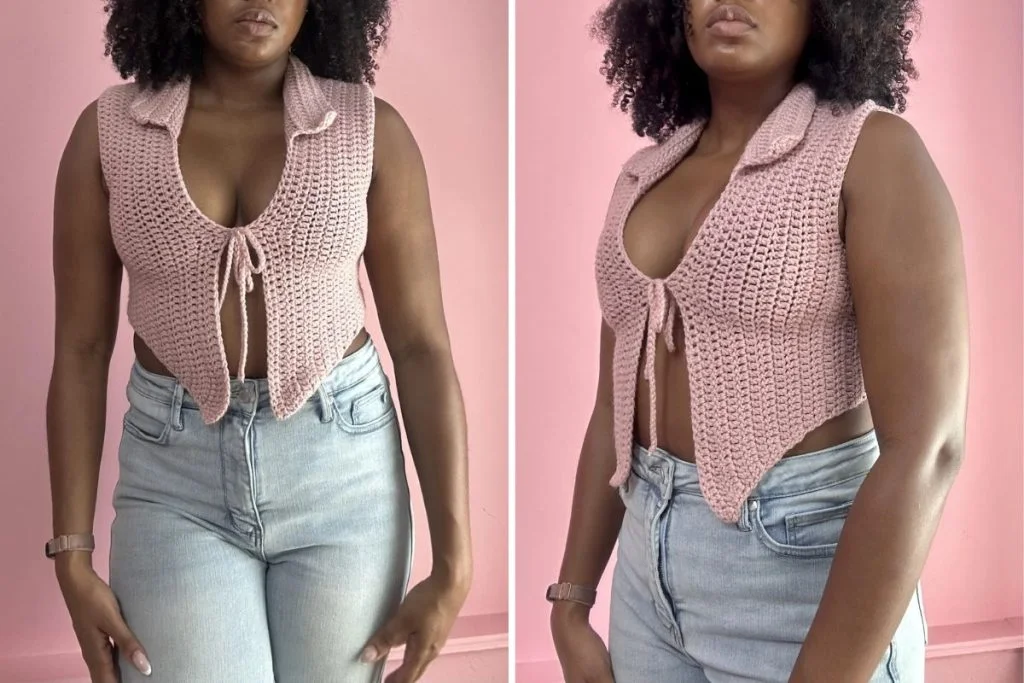
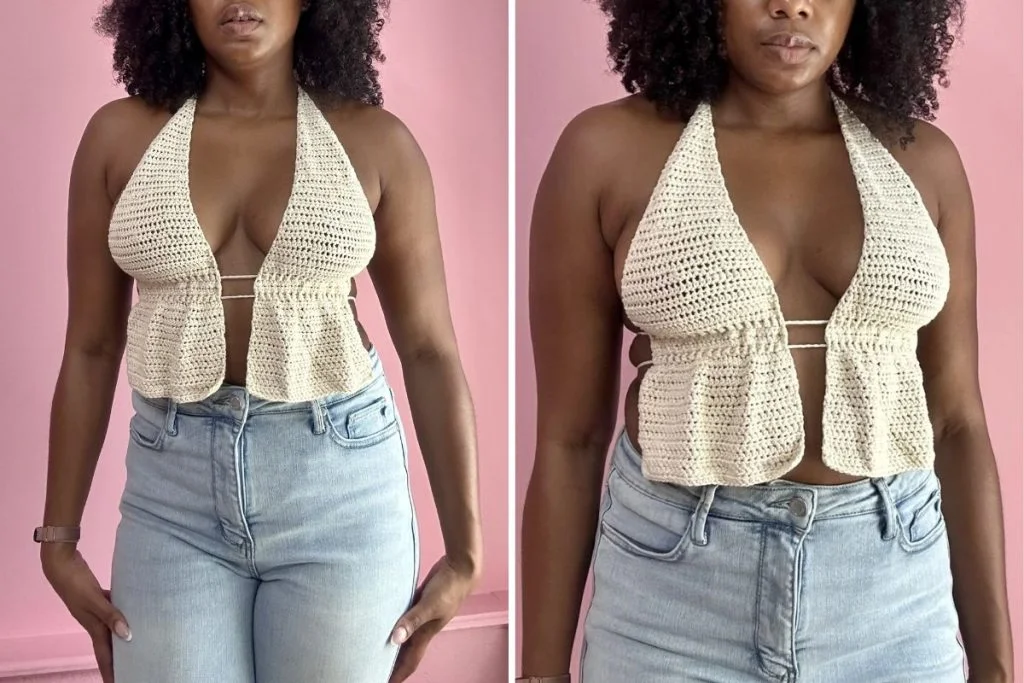
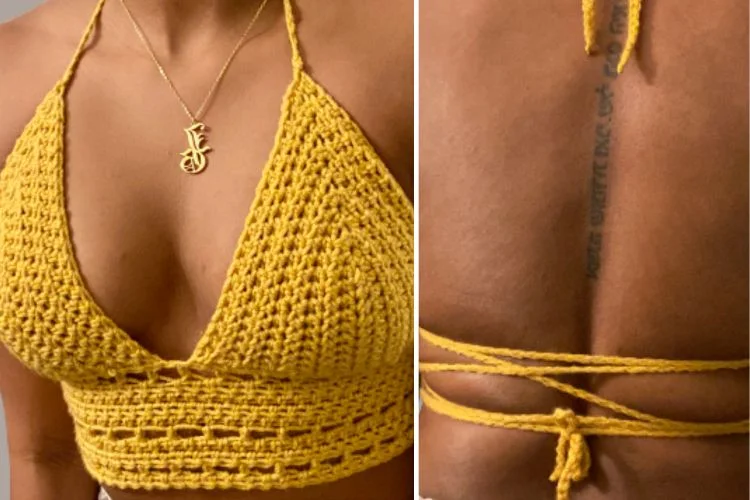
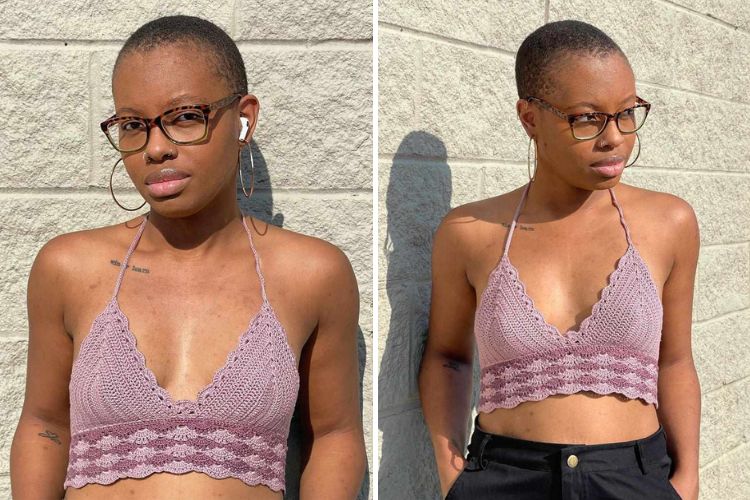
These crochet patterns are available for free on our website – simply click the photo you like!
Helpful Tools
These tools will make crocheting much easier.
- Stitch markers and row counters to always stay on track with your increases and rounds.
- Online calculators:
- How much yarn is left in a skein – don’t guess, calculate it, and see if you have enough to finish your crochet top.
- Number multiples generator – find your perfect repeat with the easy-to-use multiples generator.
- Yarn length and weight converter – easily switch between yards and meters, ounces and grams.
- Increase and decrease calculator – calculate your increases and decreases when creating fitted garments or shaping underarms.
Troubleshooting
As with any project, you may stumble upon some issues when crocheting a top. Here are some common problems and how to fix them:
Problem #1: My crochet top turned out too small / too big!
1. Possible cause: You chose the wrong size to begin with because you did not take measurements properly.
2. Possible cause: Your gauge is off (you haven’t matched the yarn weight with the hook size);
3. Possible cause: You measured your gauge swatch without blocking it (only wet blocking will show you the final gauge).
Fix: Addressing these causes makes sense only regarding your next project. Donate the ill-fitting item, unravel it, or gift it to someone you love, and make another one.
Problem #2: My top is too slouchy and doesn’t keep its shape!
Probable cause: You probably chose the wrong type of yarn for the project. Remember that cotton yarn is rather heavy and tends to stretch when worn. The same problem may occur if your hook size is too big, resulting in loose stitches.
Fix: Unravel or donate it, learn your lesson, and make another one.
Problem #3: My crochet top is too see-through!
Probable cause: Your stitches are too loose because your hook size is too big or the yarn is too lightweight.
Fix: Many crocheted garments are naturally a bit see-through, because crochet and knitting create eyelets, after all! However, if your stitches are too loose, try using a smaller hook or choosing a heavier yarn. Make sure to wash and block your swatch to see if you like the effect. Alternatively, line the garment with fabric to create another layer underneath.